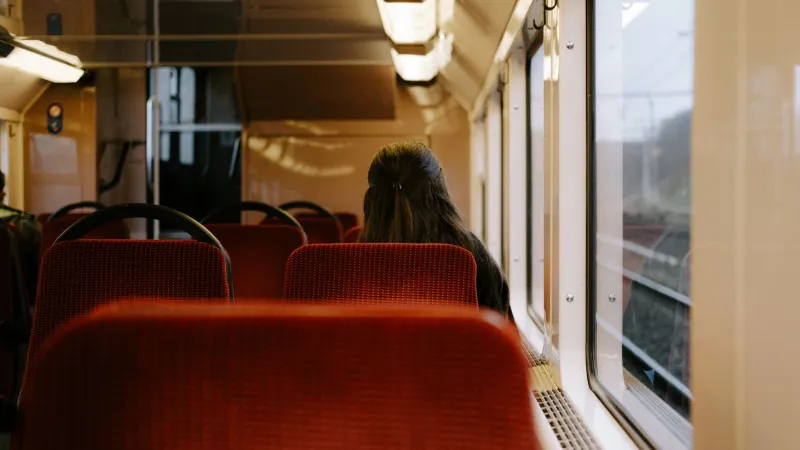
Surrounded by Everyone, Known by No One: The Loneliness Nobody Warns You About
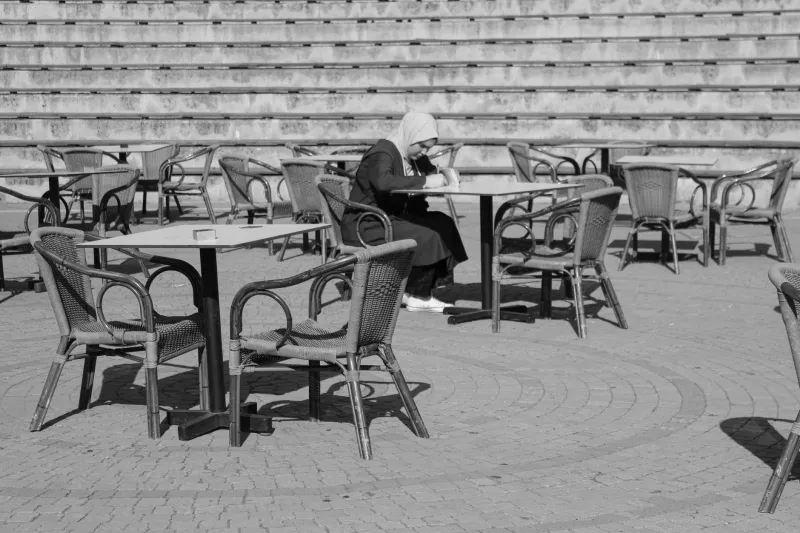
There's a version of expat life that exists in your head before you go. It involves easy friendships formed over shared adventures, a local community that folds you in warmly, and a social life that feels richer and more interesting than whatever you left behind in the US. For some people, that version becomes real — eventually, partially, with a lot of effort.
For many more, the first real surprise of living abroad isn't the bureaucracy or the language barrier or the food adjustment. It's the loneliness. Deep, disorienting, and made somehow worse by the fact that you're surrounded by people constantly.
The Paradox of the Crowded Stranger
There's something uniquely isolating about being an outsider in a busy place. In a quiet small town, at least the emptiness makes sense. But when you're navigating a packed subway in Tokyo or sitting in a crowded plaza in Buenos Aires, the contrast between all that human energy and your own disconnection can feel almost surreal.
Language is a big part of this. Even if you speak the local language at a functional level, there's a register of intimacy — jokes, slang, cultural references, the shorthand of shared history — that takes years to access. You can order your coffee correctly and still feel like a tourist in your own daily life.
But language isn't the whole story. Even expats in English-speaking countries, or in cities with large English-speaking expat communities, describe this same hollow feeling. Because the issue isn't just communication — it's continuity.
"Everyone I met in the first year felt like someone I was starting from scratch with," says one American who spent three years in Amsterdam. "Back home, my friends knew who I was in high school, what I'd been through, what I was like before I became who I am now. Abroad, I was just this person who showed up. You can make friends, but there's a depth that takes a long time to build."
The Transience Problem
Expat communities have a particular social dynamic that makes lasting connection genuinely difficult: everyone is passing through.
In most expat hubs — Berlin, Bangkok, Medellín, Dubai — there's a rotating cast of people on one-year visas, short-term work assignments, or indefinite nomadic arrangements. You meet someone great at a language exchange or a co-working space, you start building something real, and then three months later they're in a new city or back home. Rinse and repeat.
This churn is exhausting in a way that's hard to explain to people who haven't experienced it. After a few cycles of investing in a friendship only to watch it dissolve into occasional Instagram likes, many expats describe pulling back — becoming more guarded, less willing to invest in new connections because the return on emotional investment feels too uncertain.
Visa instability makes this worse. When your own ability to stay in a country is contingent on paperwork renewals, job status, or relationship circumstances, it's hard to plant roots anywhere — including in other people.
Homesickness That Doesn't Feel Like Homesickness
Here's something that catches a lot of people off guard: the loneliness of expat life often doesn't announce itself as homesickness. It shows up instead as a vague restlessness, a low-grade irritability, a sudden loss of interest in the things that drew you abroad in the first place.
You might find yourself spending more time scrolling US news sites than exploring your neighborhood. Or watching old TV shows from home rather than engaging with local culture. Or feeling irrationally annoyed by small things — the way people queue, the hours that businesses keep, the social customs that once seemed charming and now just feel like obstacles.
These are often homesickness in disguise. And recognizing them for what they are — a signal that your sense of belonging needs attention, not that the country you're in is wrong for you — is the first step toward doing something useful about it.
What Long-Term Expats Actually Do
The people who find their footing — who build lives abroad that feel genuinely rooted rather than perpetually provisional — tend to share a few approaches that are worth paying attention to.
They stop waiting for community to find them. Passive social strategies (going to a bar, joining a Facebook group, showing up at a meetup once) rarely build real connection. The expats who thrive tend to be the ones who pick something specific — a weekly sports league, a volunteer role, a recurring class — and show up consistently enough that relationships have time to develop naturally.
They make peace with solitude as a skill. There's a difference between loneliness, which is unwanted isolation, and solitude, which is chosen aloneness that can be genuinely restorative. Learning to enjoy your own company — to take yourself to a museum, eat alone at a restaurant without your phone, sit in a park without needing it to mean something — is one of the most underrated tools in the expat toolkit.
They invest in local friendships, not just expat ones. Expat social circles are convenient and comforting, but they come with the transience problem baked in. Putting real effort into friendships with locals — even when it's slower, even when it requires more language patience, even when the cultural gap requires more navigation — tends to produce more stable, more grounding connections over time.
They name what they're feeling. This sounds small, but it matters. Many expats spend months experiencing loneliness without ever calling it that — because calling it that feels like admitting the adventure isn't working. Saying "I'm lonely" out loud, to a friend back home or a therapist or even just in a journal, tends to reduce its power considerably.
Living abroad is one of the most expansive things you can do with your life. It opens you up in ways that are hard to articulate until you've been through them. But it also asks something of you that the brochure version never mentions: the willingness to sit with discomfort, to be unknown for a while, and to do the slow, unglamorous work of building a world from scratch. That part is hard. It's also, for most people who stick with it, entirely worth it.