How to Actually Make Friends Abroad (Without Relying on Hostel Small Talk)
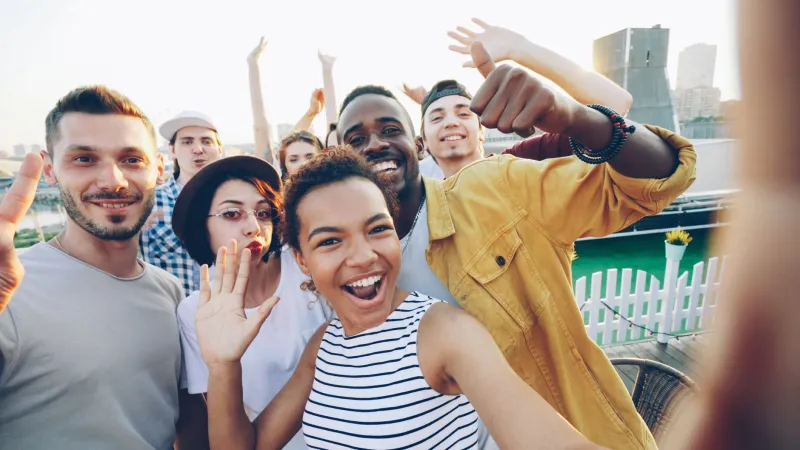
Solo travel has a beautiful promise baked into it: total freedom, zero compromises, adventure entirely on your terms. And for the most part, it delivers. But there's a specific kind of loneliness that sneaks up on solo travelers—not the dramatic, cinematic kind, but the low-grade hum of eating another meal alone and realizing you haven't had a real conversation in four days.
The standard advice is to "just stay at hostels" or "be open to meeting people." That's fine as far as it goes, but it tends to produce a lot of surface-level connections—the kind where you share a dorm and a few beers, exchange Instagram handles, and never actually speak again. If you're a US traveler looking for something more substantial, you're going to need a more intentional approach.
Here's how to actually find your people when you're abroad.
Start Before You Land
The single biggest mistake solo travelers make is waiting until they arrive somewhere to start building community. By the time you've got jet lag and a new SIM card, you're already behind.
Digital communities are your first move. Discord has become genuinely useful for travelers—there are active servers organized by destination, lifestyle (digital nomad, budget travel, long-term travel), and even specific interests like hiking, food, or photography. Search for servers tied to the city or country you're heading to and introduce yourself before you even book your flight.
Reddit's travel and expat subreddits (r/solotravel, r/digitalnomad, r/expats, and city-specific ones like r/Bangkok or r/Lisbon) are also solid. Post that you're heading somewhere, ask for recommendations, and you'll often find people already there who are happy to meet up.
Facebook Groups—yes, still—are surprisingly active for expat and traveler communities in many cities. Search for groups like "Americans in [City]" or "Digital Nomads [Country]" and you'll find people organizing meetups, asking questions, and generally being helpful in ways that feel more human than an algorithm-curated feed.
Think Beyond the Hostel
Hostels are great for a lot of things. Deep, lasting friendship is not always one of them. The turnover is too fast, the context too transient. Everyone's leaving tomorrow. Nobody's invested.
Co-living spaces are a different story. These are essentially shared housing arrangements designed for remote workers and long-term travelers—places like Selina, Outsite, or smaller independent operations in cities from Medellín to Bali to Tbilisi. You get a private room (usually) but shared common areas, regular community events, and neighbors who are staying for weeks or months, not days. The depth of connection that develops in those environments is genuinely different.
If a full co-living space isn't in your budget, look for co-working spaces with community programming. Places like these often host weekly social events, skill-sharing workshops, or coffee chats specifically because they understand that their members are mostly solo workers who want human contact.
Use Your Skills as Social Currency
One of the most underrated ways to meet people abroad is to show up with something to offer—not money, but a skill or interest.
Language exchanges are an obvious entry point. Apps like Tandem or HelloTalk connect you with locals who want to practice English while you practice their language. What starts as a structured language swap often turns into a genuine friendship, because you're both vulnerable and both invested.
Skill-sharing platforms and local workshops are another route. Taking a cooking class, a ceramics course, or a salsa lesson puts you in a room with people who share at least one interest, which is already more common ground than "we both ended up in the same city."
Volunteering is worth mentioning, though it deserves a thoughtful approach. Look for opportunities where you're genuinely contributing a useful skill rather than just showing up for the experience. Workaway and Worldpackers connect travelers with hosts who need real help in exchange for accommodation—and the relationships that develop in those contexts tend to be some of the most authentic you'll find on the road.
Navigate the 'Perpetual Outsider' Trap
Many US travelers abroad get stuck in what might be called the expat bubble—a social world made up almost entirely of other foreigners, usually other Americans and Western Europeans. It's comfortable. It's easy. And it's a great way to never actually experience the place you're living in.
Breaking out of that bubble takes deliberate effort. Learn at least the basics of the local language—not because you'll become fluent, but because the act of trying signals respect and opens doors. Show up to local events, not just tourist-facing ones. Ask locals for recommendations instead of defaulting to TripAdvisor.
It also helps to manage your expectations around what "integration" actually looks like. Building real relationships with locals takes time, and in some cultures, friendship develops much more slowly than Americans are used to. Don't mistake politeness for closeness, and don't give up when it doesn't happen instantly.
Protect Your Independence While Building Community
Here's the tension that a lot of solo travelers feel but don't always articulate: you want connection, but you also chose to travel alone for a reason. You don't want to trade one set of social obligations for another.
The good news is that community abroad doesn't have to mean being constantly surrounded by people. Some of the best travel friendships are low-pressure—a standing coffee meetup once a week, a shared hike, a group chat that's active when you want it to be. You get to design the level of involvement that works for you.
Being clear about that with yourself (and with the people you meet) makes everything easier. You're not antisocial—you're just selective. That's not a flaw. It's actually one of the things that makes solo travel worth doing.
The Real Goal
Finding your tribe abroad isn't about collecting contacts or filling your social calendar. It's about feeling like a person in a place rather than a visitor passing through it. That feeling—of belonging, even temporarily, somewhere unexpected—is one of the most quietly powerful things travel can give you.
It doesn't happen by accident. But with the right approach, it's a lot more attainable than most people think.