Watching America From the Outside: How Living Abroad Rewires Your Political Brain
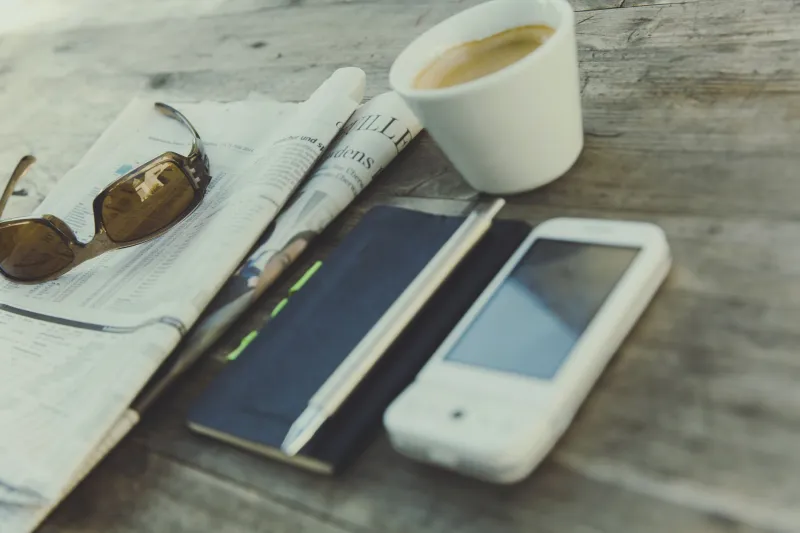
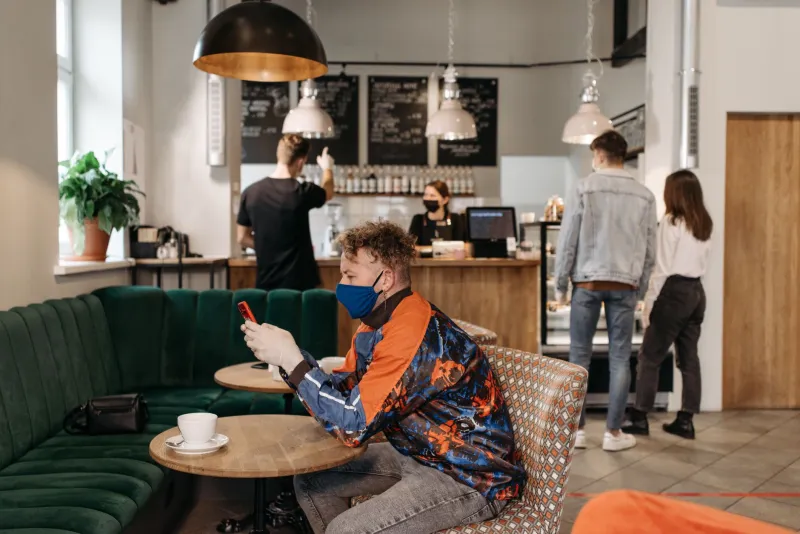
You're sitting at a café in Lisbon, or maybe a guesthouse common room in Chiang Mai, and your phone buzzes with a CNN push notification. Some political firestorm has erupted back home — the kind that, six months ago, would have sent you spiraling into a three-hour doom-scroll. Instead, you read the headline, set your phone face-down, and go back to your coffee.
That moment — that quiet, almost unsettling calm — is the thing nobody really prepares you for.
Everyone talks about reverse culture shock in terms of missing familiar food or feeling overwhelmed by American portion sizes. But the deeper, stranger version of it? That's the one where your own country's political landscape starts to feel like a TV show you used to watch obsessively and then just... stopped. You still know the characters. You remember the plot. But the emotional grip is gone.
The 24/7 Cycle Needs a Captive Audience
American political media is specifically engineered to keep you inside it. The breaking news alerts, the hot takes, the counter-hot takes, the think pieces about the hot takes — it's an ecosystem that only functions if you're fully submerged. When you leave the country for an extended stretch, you're essentially stepping out of the tank.
At first, it feels irresponsible. Like you're neglecting something. You refresh Twitter out of habit, catch a headline about some congressional standoff, and feel a faint echo of the anxiety you used to carry around constantly. But then you look up and realize the street outside is still full of people going about their lives, completely unbothered by whatever is consuming the American internet that day.
That geographic distance creates something powerful: perspective. And perspective, it turns out, is deeply uncomfortable when you eventually bring it home.
Your Emotional Reactions Don't Match the Room
Here's where it gets socially awkward. You come back to the US — for a visit, or for good — and you walk into a family dinner or a backyard barbecue where everyone is deep in the political conversation of the moment. And you just... can't find your footing.
It's not that you don't care about the issues. It's that your relationship to the urgency has fundamentally changed. While you were gone, you watched the same stories play out in other countries — different names, different parties, similar patterns. You started to see American political drama less as a unique crisis and more as a variation on a very human theme. That's a hard thing to explain to someone who hasn't left.
You might try to offer some international context — "Well, in Germany they handled something similar by..." — and watch the room go cold. Nobody asked for the comparative politics seminar. They want you to pick a side and feel appropriately furious about it. When you can't summon the fury on demand, you start to feel like an outsider in a conversation happening in your own language.
The Guilt of Not Being Outraged Enough
There's a specific flavor of guilt that comes with this. American political culture — across the spectrum — places enormous moral weight on staying engaged, staying angry, staying in it. To step back is to be complicit. To feel calm is to be privileged. To offer nuance is to be naive.
And maybe some of that critique is fair. Privilege absolutely plays a role in who gets to disengage from political stress and who doesn't. That's worth sitting with honestly.
But there's also something worth examining in the assumption that maximum emotional investment automatically equals maximum clarity or usefulness. Plenty of people who've never left their zip code are absolutely exhausted by political engagement and not sure it's moved the needle at all. Distance doesn't make you a bad citizen. It makes you a different kind of observer — and that has its own value.
What You Actually Gain From the Distance
When American politics becomes something you watch rather than something you're inside, a few things come into focus that are genuinely hard to see from within the noise.
You notice how much of the daily outrage is about performance rather than policy. You start to recognize the recurring rhythms — the election cycles, the manufactured controversies, the way certain stories vanish from the news as quickly as they appeared. You see how other democracies handle similar tensions, sometimes better, sometimes worse, but always differently enough to challenge the assumption that the American way is the only logical way.
You also notice how much of what gets framed as a uniquely American crisis is actually a global one. Income inequality, political polarization, distrust of institutions — these are not American inventions. Watching them unfold in a dozen other countries before coming home gives you a mental map that most people around you simply don't have.
Coming Back to the Conversation
The challenge, when you return, is figuring out how to re-engage without either pretending the distance didn't change you or being insufferably smug about your newfound global perspective. Both are tempting. Both are wrong.
The honest move is to acknowledge that you're working from a different set of reference points now, and that those reference points are genuinely useful — but so is the lived experience of people who stayed and kept showing up. The person who's been canvassing their neighborhood for three years while you were backpacking Southeast Asia knows things you don't. That exchange goes both ways.
What extended time abroad actually gives you isn't superiority. It's a second vantage point. And in a political culture that's increasingly convinced there's only one way to see anything, a second vantage point is not nothing.
The News Will Still Be There When You Get Back
If you're currently abroad and watching American politics from a distance, feeling that strange mix of detachment and guilt — you're not broken. You're not a bad American. You're just someone whose frame of reference got bigger than the cable news cycle.
That's actually kind of the whole point of going out into the world in the first place.
The 24/7 outrage machine will still be running when you land at JFK. The hot takes will still be hot. The crises will still feel like crises to the people inside them. You don't have to perform an urgency you don't feel. But you do have to figure out how to bring what you've learned back into a conversation that wasn't waiting for you.
That's the real reverse culture shock. Not the jet lag, not the sticker shock at the grocery store. It's the moment you realize that leaving changed how you see home — and that home doesn't necessarily want to hear about it.