When the Golden Arches Feel Like a Personal Failure: The Complicated Emotions of American Food Abroad
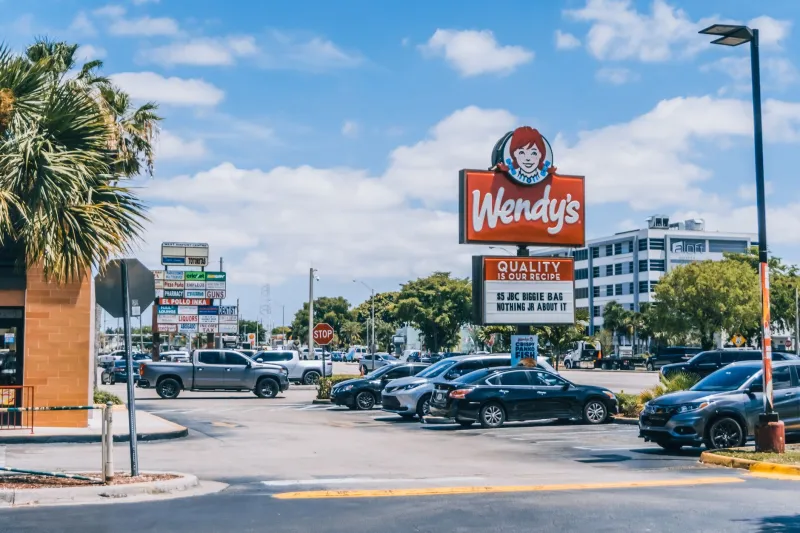
You had a plan. You were going to eat well on this trip. Street food in Chiang Mai. Fresh pasta in Bologna. Grilled fish pulled out of the Adriatic that morning. You had Pinterest boards. You had a Notes app full of restaurant recommendations from people who've been there. You were not, under any circumstances, going to be that American.
And then, somewhere around week three, you walked past a Starbucks in Tokyo and felt something shift in your chest. A pull. A want. Something embarrassingly close to relief.
This is the part of travel that nobody puts in the Instagram caption.
The Myth of the "Pure" Traveler
There's a version of the ideal traveler that lives rent-free in a lot of American heads — someone who eats everything local, never complains about the food, and would rather go hungry than set foot in a chain restaurant abroad. This person is culturally fluent, adventurous, and completely unbothered by the absence of ranch dressing.
Most of us are not this person. And pretending we are creates a specific kind of internal drama that tends to hit somewhere around the two-week mark of a long trip.
The truth is, food is one of the most emotionally loaded parts of travel. It connects to memory, comfort, identity, and belonging in ways that are genuinely hard to untangle. When you're jet-lagged, slightly lost, and haven't had a conversation in your native language in four days, a familiar logo can feel less like a corporate intrusion and more like a lifeline.
That doesn't make you a bad traveler. It makes you human.
Why American Brands Hit Different When You're Abroad
Psychologists who study food and emotion have long documented the comfort-seeking behavior that kicks in during stress or disorientation. Travel, even the good kind, is inherently disorienting. You're sleeping in unfamiliar beds, navigating menus you can't fully read, and making a hundred small decisions a day in an environment that doesn't bend to your defaults.
Under those conditions, the brain doesn't want adventure. It wants to feel safe. And for Americans who grew up eating certain foods — Oreos, Pringles, a specific brand of peanut butter — those products are neurologically wired to signal comfort and home.
So when you spot a familiar product on a shelf in a Lisbon supermarket and feel a sudden, irrational urge to buy it even though you haven't eaten it in years? That's not weakness. That's your nervous system doing what nervous systems do.
The complication is the guilt that follows.
The Judgment We Carry (And Project)
A lot of travelers — especially American ones who've done some reading about overtourism and cultural sensitivity — arrive abroad carrying a quiet but heavy set of rules for themselves. Don't be loud. Don't be demanding. Don't assume everyone speaks English. And definitely don't eat at chains when there's a perfectly good local restaurant next door.
These aren't bad instincts. Being a thoughtful traveler matters. But when those rules become a source of shame rather than genuine cultural curiosity, something's gone sideways.
The moment you start judging yourself for wanting a familiar food, you've moved from cultural respect into performance. And that performance — of being the Right Kind of Traveler — is exhausting in a way that actually gets in the way of real connection with the places you're visiting.
Worse, it can make you judgmental of other travelers you spot doing the thing you're secretly tempted to do. That couple eating Big Macs in Rome? Part of you sneers. Another part of you is jealous they don't seem to care.
What Encountering American Food Actually Reveals
Here's the thing about stumbling across a Subway in Seoul or a Cinnabon in an Istanbul airport: it doesn't have to mean anything bad about you. But it does offer a genuinely interesting window into who you are when the social scaffolding of home is removed.
Some travelers discover they're more adventurous than they thought — they walk right past the familiar stuff without a second glance. Others find that their relationship to American food was more complicated than they realized: maybe they were eating it out of habit at home, not actual preference, and being abroad clarifies that.
And some find that the craving hits hard, they give in, and the food tastes... fine. Maybe even a little disappointing. The Pringles you missed so desperately taste the same everywhere. The McDonald's fries are fine. The fantasy of the thing was always bigger than the thing itself.
That gap — between what you imagined the comfort would feel like and what it actually delivers — can be one of the more quietly profound moments of a long trip.
The Case for Letting Yourself Off the Hook
This isn't an argument for eating American fast food across every continent. Local food is genuinely one of the best parts of travel, and making an effort to engage with it — really engage, not just photograph it — is worth doing.
But the obsessive policing of your own cravings? That's not cultural sensitivity. It's just another form of self-consciousness that keeps you in your head instead of present in the place you're standing.
If you're deep in a food rut, homesick, or just genuinely exhausted, eating something familiar isn't a betrayal of the trip. It's a maintenance decision. You fuel up, you feel steadier, and then you go find the night market or the family-run trattoria or the hole-in-the-wall soup place that someone's grandmother has been running for forty years.
The best travelers aren't the ones who never waver. They're the ones who know when they need to reset and don't waste three days in a spiral of guilt over a sleeve of Oreos.
A Few Things Worth Remembering
Craving familiar food doesn't erase the authentic experiences you've had. One meal at a chain doesn't undo a week of eating like a local. It's not a ledger.
The food you grew up with is part of your culture too. There's something a little contradictory about celebrating other people's food traditions while treating your own as something to be ashamed of.
Nostalgia is data. What you miss when you're away tells you something real about yourself — your upbringing, your comfort zones, the specific textures of your childhood. That's worth paying attention to, not suppressing.
The local experience is still there when you're ready. Grabbing a familiar snack doesn't close any doors. The street food cart is still two blocks away whenever you want it.
Travel changes you in ways that are big and slow and hard to articulate until you're back home looking at photos. But sometimes the most honest moments of a trip are the small, unglamorous ones — standing in a foreign grocery store, reaching for something you recognize, feeling the complicated tangle of homesickness and guilt and hunger and relief all at once.
That's not a failure of your travel identity. That's just what it feels like to be away from home long enough for it to actually mean something.