Turns Out You Were American All Along: What Leaving the US Teaches You About Yourself

There's a particular moment that almost every American expat experiences, usually somewhere between months three and six of living abroad. You're at a dinner party, maybe in Lisbon or Chiang Mai or Buenos Aires, surrounded by people from six different countries, and someone says something — a throwaway comment about work ethic, or personal space, or tipping, or why you seem so relentlessly optimistic — and you realize they're talking about you. Not you specifically. Americans. And for the first time in your life, you are undeniably, visibly, inescapably one of them.
Leaving America doesn't strip you of your American-ness. In a strange twist, it tends to intensify it.
The Invisible Becomes Visible
When you live inside a culture, you don't really see it. It's just the water you swim in. You don't notice that you smile at strangers because everyone around you does the same. You don't register that your instinct to introduce yourself with your job title is a cultural quirk rather than a universal social norm. You don't think twice about the fact that you apologize constantly, or that you genuinely believe things can always get better with enough effort.
Move abroad, and suddenly all of that is in sharp relief.
The Dutch will tell you directly that your presentation ran long. The Japanese colleague won't interrupt, but won't agree either, and you'll spend three days wondering what you did wrong. The Spanish friends you're making won't show up to dinner until 10 p.m. and will find your 7:30 suggestion genuinely baffling. None of this is criticism — it's just contrast. And contrast is one of the most powerful teachers available to a traveler willing to pay attention.
You start cataloging things about yourself you never had language for before. The relentless forward momentum. The discomfort with silence. The deep-seated belief that being busy equals being valuable. The impulse to fix things, optimize things, improve things. These aren't flaws or virtues — they're American. And you probably didn't know how thoroughly they'd shaped you until someone from another culture raised an eyebrow.
The Stereotype You Swore You Wouldn't Be
Here's where it gets uncomfortable. Most Americans who move abroad do so, at least in part, because they want to transcend the caricature. The loud tourist. The one who doesn't learn the language. The person who compares everything to back home. You packed your bags with the explicit intention of being different from that.
And then you catch yourself telling a local how much better the barbecue is in Texas. Or getting genuinely irritated that the customer service is slow. Or explaining, for the fourth time this month, that in the States, we'd just fix that.
It's a humbling loop. The very self-awareness that makes you cringe at the stereotype is itself a pretty American trait — the constant self-monitoring, the need to be perceived as one of the good ones. Recognizing this isn't about self-flagellation. It's about getting honest.
The goal isn't to sand down every American instinct until you're some kind of cultureless global citizen. That's not liberation — that's just a different kind of performance. The goal is to hold your own identity with some curiosity instead of either defending it reflexively or rejecting it wholesale.
What's Actually Non-Negotiable
Spend enough time abroad and you'll start to figure out which parts of your American identity are habits you picked up and which ones are genuinely you. That distinction matters.
Maybe you've loosened up about punctuality. Maybe you've learned to sit with silence in conversation without rushing to fill it. Maybe you've stopped tipping in countries where it's considered rude. These are adaptations, and they're healthy.
But maybe you still can't fully let go of the belief that individuals have the power to change their circumstances through effort. Maybe you still feel a particular kind of restlessness that your European friends don't seem to share. Maybe you still care — really care — about being direct, about saying what you mean, about not leaving things vague when clarity is possible.
Those might just be you. Or they might be so deeply American that the line has blurred. Either way, they're worth keeping if they serve you.
The expat who thrives long-term isn't the one who erases themselves to fit in. It's the one who knows which parts of themselves to adapt and which parts to stand behind.
The Identity Tightrope
Navigating this looks different for everyone, but a few things tend to help.
Stay curious, not defensive. When someone points out something distinctly American about your behavior, treat it like information rather than an attack. Ask questions. It's genuinely interesting data about how culture shapes behavior.
Stop performing humility. There's a version of the American abroad who overcorrects so hard they spend every dinner apologizing for their country's foreign policy. That's exhausting for everyone, including you. You can acknowledge complexity without making yourself a stand-in for every policy decision made in Washington.
Find the overlap. Every culture has its version of wanting to connect, wanting to be understood, wanting to build something. Lead with that. Your American-ness doesn't have to be the first thing on the table.
Let the friction teach you. The moments of cultural discomfort — when you feel misread, or when you misread someone else — are the actual education. Not the Instagram moments, not the landmark visits. The friction.
You Don't Have to Resolve It
Here's the thing nobody tells you before you go: you don't have to land somewhere definitive. You don't have to decide whether you're proud of being American, embarrassed by it, or somewhere in between. You don't have to come home with a tidy narrative about how travel changed you.
What you get instead is something more useful — a clearer sense of where you end and your culture begins. That's not a small thing. Most people never get the chance to see the water they swim in. You did.
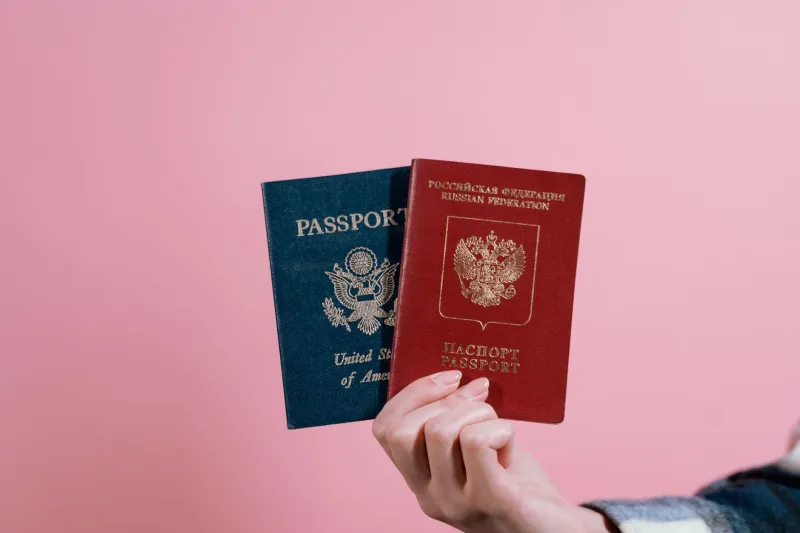
The expat paradox isn't a problem to solve. It's a tension to live in. And honestly? Learning to sit with that kind of productive tension — holding your identity loosely without losing it entirely — might be the most valuable thing a passport ever gets you.