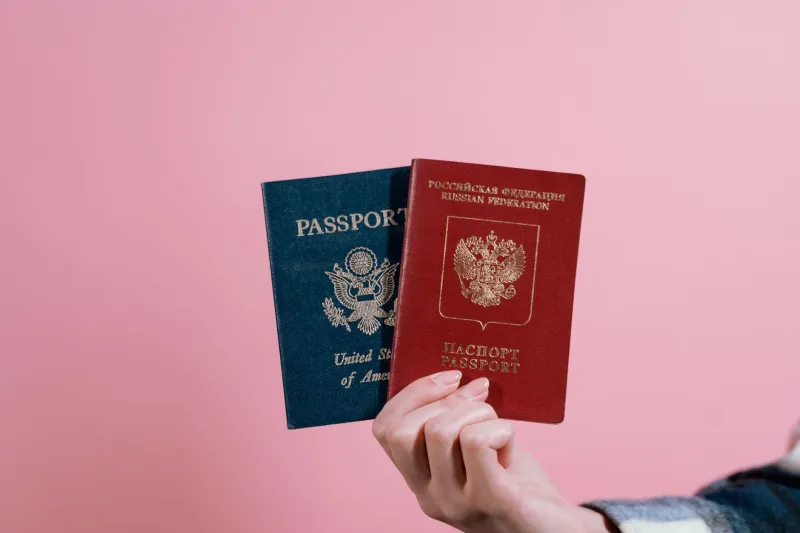
Welcome Back, Stranger: When America Feels More Foreign Than the Places You Just Left
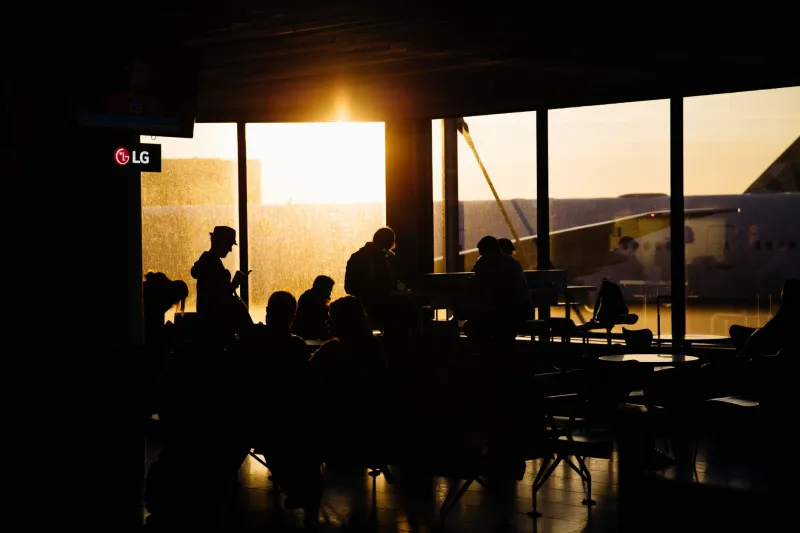
You made it back. Customs stamped your passport, the TSA agent waved you through, and suddenly you're standing in baggage claim at O'Hare or LAX or Hartsfield-Jackson, surrounded by people speaking your native language, and you feel — weirdly, unsettlingly — like an outsider.
Nobody warned you about this part.
We talk a lot about culture shock when you leave the US. You'll read a hundred articles about adjusting to smaller apartments, unfamiliar food, different social norms. But the reverse — the strange, creeping disorientation of returning to a place that's supposed to be yours — gets glossed over, dismissed, or mistaken for ingratitude. "You just got back from traveling the world," people will say. "What do you possibly have to complain about?"
A lot, actually. And it's worth talking about.
The Gap Between the Country You Left and the One You Returned To
Here's the thing about extended travel: it changes your reference points. Spend six months navigating a city by foot, eating from street stalls, and having conversations with people whose entire worldview was shaped by a completely different history — and your baseline shifts. What felt normal before starts to look different through that new lens.
So when you come back to your hometown and pull into the Applebee's parking lot where you used to hang out in high school, or scroll through a social media feed full of debates that felt urgent before you left but now seem almost surreal — you're not being snobby. You're experiencing a genuine psychological phenomenon called reverse culture shock, and it's more common than most travelers admit.
Psychologists describe it in stages: the honeymoon of being back (clean sheets! free refills! your mom's cooking!), followed by a creeping irritability, then a kind of grief, and finally — if you're lucky and patient — reintegration. The problem is that most people expect to skip straight from stage one to stage four, and when they don't, they assume something is wrong with them.
Nothing is wrong with you. You just grew, and growth is almost always uncomfortable.
Why Familiar Places Feel Like Sets From a Movie
One of the most disorienting parts of returning home is the way ordinary places can feel staged. Your childhood bedroom. The grocery store you've shopped at since you were a kid. Your favorite bar. You know these places. You have memories woven into their walls. And yet you walk through them feeling like a tourist who's read the guidebook but can't quite connect to what they're seeing.
Part of this is simple contrast. If you've been living in, say, a centuries-old neighborhood in Lisbon or a chaotic, colorful district in Hanoi, the strip malls and drive-throughs of suburban America can look almost aggressively mundane. Not worse, necessarily — just different in a way you never noticed before, because you had nothing to compare it to.
But it's also deeper than aesthetics. When you travel seriously — not the two-week resort trip, but the kind of travel where you actually live somewhere for a while — you start to understand that the way Americans do things isn't the only way. The way we think about time, personal space, ambition, food, community — these things vary wildly across cultures, and once you've seen that variation up close, it's impossible to unsee it.
Coming home doesn't erase that knowledge. It just puts it in uncomfortable contrast with everything around you.
The Social Piece Is the Hardest Part
You can adjust to the portion sizes and the car culture and the weird abundance of the cereal aisle. What's genuinely hard is navigating your social world.
Your friends and family didn't go anywhere. They've been living their lives — good, full, meaningful lives — while you were gone. But the gap in shared experience can feel enormous. You want to talk about what you saw and felt and learned, and they want to catch you up on the neighborhood drama and who got promoted at the office and what happened in the finale of that show everyone was watching.
Neither of you is wrong. But the mismatch can be lonely in a way that's hard to articulate without sounding condescending, which makes most returning travelers just... stop talking about it. They shelve the experience, smile and nod, and try to slot back into their old life like nothing happened.
That's where things go sideways. Suppressing the experience doesn't integrate it — it just delays the reckoning.
Strategies That Actually Help (Without Dismissing What You've Been Through)
Give yourself a real adjustment window. Not a weekend. Expect the weirdness to last weeks, maybe a couple of months. That's normal. Treating it like a problem to be solved quickly usually makes it worse.
Find your people — or build a new circle. Seek out other returned travelers, expats, or internationally minded folks in your area. Meetup groups, travel-focused subreddits, local language exchange events — these can be lifelines when you feel like no one around you gets it.
Journal the contrast. Not to complain, but to process. Write down what feels strange, what you miss, what surprised you about being back. Externalizing those observations gives them somewhere to go other than festering quietly in the background.
Resist the urge to rank. The temptation to declare that [country you loved] does everything better is real, but it's also a trap. Comparison is useful for understanding; it's corrosive when it becomes a scorecard. America has real problems. So does everywhere else. Holding both truths at once is part of the work.
Carry something forward. Maybe you learned to slow down over meals. Maybe you got comfortable with uncertainty. Maybe you started caring less about square footage. Whatever shifted in you abroad, look for ways to honor it at home — not as a performance of worldliness, but as a genuine integration of who you've become.
"Home" Is a Moving Target
The assumption baked into the phrase "coming home" is that home is a fixed point — a place you left, preserved in amber, waiting for your return. But it isn't. It changed while you were gone. And more to the point, you changed while you were gone.
That's not a tragedy. It's kind of the whole point.
The travelers who come back and slide seamlessly into their old lives, unchanged and unbothered — they're not the ones who went deepest. The ones who feel the friction, who sit with the strangeness, who have to consciously rebuild their sense of place — those are the people who actually went somewhere.
So if you're back in the US right now and your hometown feels like a foreign destination, lean into it a little. Be curious about it the way you were curious about the places you traveled. Ask questions. Notice things. Give it the same generous attention you gave everywhere else.
You might find that home — this version of it, the one you're returning to as a changed person — is more interesting than the one you left.