Solo and Female in Every Region: A Practical Safety Guide That Skips the Scare Tactics
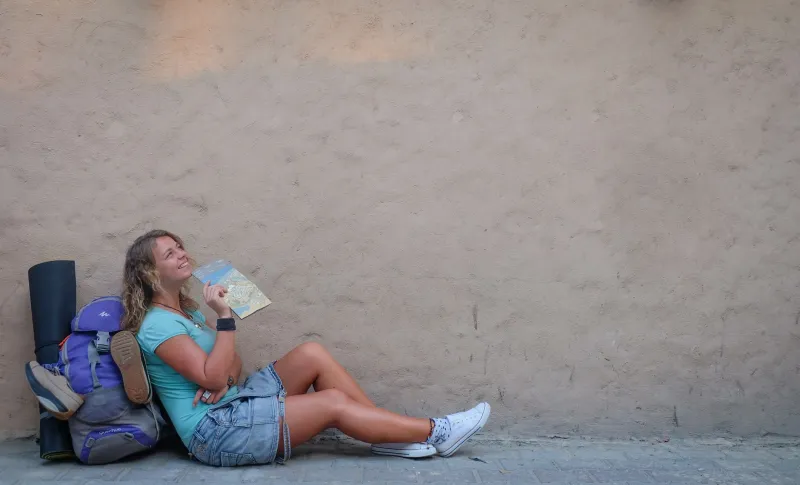
Every solo female traveler has a version of this story: you mention your upcoming trip to a well-meaning relative, and within thirty seconds you're getting warnings about kidnapping statistics, cautionary tales from a news story from 2009, and a suggestion that maybe you should wait until you have someone to go with.
Here's the thing — some risks are real, and they deserve honest conversation. But a lot of what gets handed to women as "safety advice" is really just ambient fear, dressed up as concern. The result is that the actual, useful, specific knowledge — the stuff that would genuinely help you move through the world more confidently — gets buried under a pile of vague alarm.
This guide is the other thing. Region by region, we're breaking down what solo female travelers from the US actually need to know — not to scare you off, but to send you out better prepared.
Southeast Asia: Reading the Room Beyond the Tourist Trail
Southeast Asia consistently ranks as one of the most solo-female-friendly regions in the world, and for good reason. Countries like Thailand, Vietnam, and Indonesia have robust traveler infrastructure, relatively low violent crime rates, and cultures that tend toward warmth and hospitality.
But "generally safe" doesn't mean "no nuance required."
In countries like Indonesia — particularly Bali — Western women are sometimes perceived through a lens shaped by years of tourism, which can mean assumptions about your availability or openness that don't match your actual intentions. Dressing modestly outside of beach areas isn't just about respecting local norms (though it is that) — it also shifts how you're read on the street.
For transportation, ride-hailing apps like Grab are your best friend across most of Southeast Asia. They're trackable, the fares are fixed, and there's a record of your driver. Use them over unmarked taxis, especially at night.
Sarah T., a 31-year-old from Portland who spent four months traveling solo through Vietnam and Cambodia, put it plainly: "The harassment I got in Vietnam was almost entirely verbal — guys calling out from storefronts. Annoying, not threatening. The bigger issue was figuring out which guesthouses were actually safe versus which ones had owners who'd let themselves into your room. Reading reviews specifically written by solo women made a huge difference."
That's the move: filter your accommodation research by solo female reviewers on platforms like iOverlander or hostelworld. Their observations will be more relevant than aggregate scores.
Latin America: Separating Myth From Legitimate Caution
Latin America is one of the most fear-laden regions in the American imagination, and some of that fear has a basis in reality — certain cities do have elevated crime rates, and petty theft is genuinely common in tourist-heavy areas. But the region is also enormous and wildly varied, and treating it as a monolith does a disservice to the millions of women who travel it safely every year.
Mexico, for example, contains some of the world's most visited destinations (Oaxaca, the Yucatán Peninsula, Mexico City) alongside areas where the State Department has issued serious warnings. The distinction matters. Mexico City's Roma and Condesa neighborhoods have a thriving solo female traveler community; the city has a women-only metro car system for peak hours, and ride-hailing apps are widely available and safer than street taxis.
Across the region, machismo culture can mean more unsolicited attention from men — catcalling, persistent invitations, occasional boundary-pushing. Most of it is low-grade nuisance rather than threat. The playbook: confident body language, sunglasses (they help you ignore without engaging), and a firm "no" delivered without apology or over-explanation.
For Colombia and Peru — both increasingly popular with US travelers — connecting with local women's networks or female-run tour operators can provide both safety and richer experiences. Apps like Tourlina connect solo female travelers with female guides and companions.
The Middle East and North Africa: Navigating Gender Dynamics With Eyes Open
This region generates some of the most intense alarm among American women considering solo travel, and some of the most genuinely transformative experiences for those who go.
Jordan is frequently cited as one of the most welcoming countries in the region for solo women, with Petra and Wadi Rum drawing international visitors and a well-developed hospitality culture. Egypt is more complex — Cairo can involve significant street harassment, particularly around heavily touristed areas — but it's also a city of 20 million people where millions of women live and move freely every day.
The practical toolkit here: research local dress expectations by city, not just by country. Istanbul operates very differently from rural Anatolia; coastal Morocco differs from the interior. Loose, modest clothing isn't submission — it's a strategic choice that reduces friction and often opens doors.
Learn a few phrases in the local language. Even broken Arabic or Turkish signals respect and tends to shift how you're received. And consider staying in women-only or female-run guesthouses for your first few nights while you get oriented.
Jamila R., originally from Atlanta and a veteran of solo trips through Morocco, Jordan, and Oman, offered this: "People kept warning me I'd feel constantly unsafe. The reality was that I felt watched — which is different. Once I understood the social codes, I actually felt more looked-after than in some American cities I've traveled in."
Europe: Don't Let Familiarity Make You Careless
Europe gets treated as a default "safe zone" by many American women, and in many respects, that's fair — Western Europe in particular has strong infrastructure, reliable emergency services, and relatively low rates of violent crime against tourists.
But familiarity breeds its own risks. Pickpocketing is rampant in tourist-dense cities like Barcelona, Rome, and Paris — and it targets people who are distracted or feel too comfortable. Drink spiking has been reported in nightlife-heavy areas across the continent. And Eastern Europe, while generally safe, has more variability in terms of how solo women are perceived and treated.
For public transit — which you absolutely should use, it's excellent — be alert during late-night hours and keep bags in front of you in crowded carriages. In Southern Europe especially, evening social life starts late; if you're out past midnight, plan your route home before you go out, not after.
Building Your Network Wherever You Land
Across every region, the single most consistent piece of advice from experienced solo female travelers is this: don't go it entirely alone. Not because you can't — you absolutely can — but because a trusted network is both a safety resource and an enrichment.
Facebook groups like "Girls LOVE Travel" (over 1 million members) and apps like Bumble BFF in international mode let you connect with local women or fellow travelers before you arrive. Female-led tour operators and local guides offer insider access alongside an added layer of comfort.
And when you get somewhere new, talk to the women who live there. The woman at your guesthouse, the one running the market stall, the one sitting next to you on the train. They know the neighborhood. They know what's actually worth worrying about and what isn't.
The world is full of people who will help you if you let them — and full of experiences that will expand you in ways you can't predict from your couch in the US. The goal of real safety knowledge isn't to keep you home. It's to get you out there with your eyes open.
Go boldly. Go prepared. Go.